You can then further categorize them and create a structure for your project information. Here you can create documents using data from your workspace and have the team members sign them within the tool. Microsoft Project will give you the possibility to attach related documents and files to the tasks themselves. This Kanban board can also be modified using different statuses, however, there are no WIP limits or other Kaban features for those looking to implement the practice. If you’re just here to wreak havoc and have some fun, and you’re not contributing meaningfully to the discussions, we will take actions to remove you from the conversation. Please also avoid flagging or downvoting other users’ comments just because you disagree with them.
Change, Risk & Benefits
For example, you can hide unused features with just a switch of a button and customize the sidebar to keep the user interface from clutter. Even its Premium version is generally more affordable than MS Project’s per-user fees. But you should also understand that a 30-day period may not be enough to determine whether a software suits your needs or not. The visual Kanban board layout is easy to understand, making it a breeze for ad-hoc teams to get started and collaborate.
Step-by-Step Guide To Enterprise Project Portfolio Management

As Microsoft phases out Project Web App, Project for the Web emerges as the future of online project management, streamlining processes for a more intuitive and efficient user experience. Stable, long-term product teams often result in higher employee retention compared to temporary project teams. Companies like Apple have benefited from this approach, with -functioning teams staying together over many years. Microsoft Project offers a detailed task list view where you can define tasks, set durations, and assign resources (team members) with specific skills. At the end of a project, managers lead retrospectives and capture lessons learned. Instead, operations managers sustain processes indefinitely and make gradual improvements.
For many people, there is an unaware mix-up between a project vs a process. While they do share commonalities and are both popular practices implemented in everyday business, they are in fact, two very different methods of operations. I’ve been fortunate enough to have experience in both these worlds, and I can honestly say that building a product is much more rewarding than delivering a product as part of a project. The biggest misconception I’ve encountered is thinking you can deliver a product as part of a project and still move the broader product needles. This breakdown highlights the Feasibility, Viability, and Value focus of products compared to the Budget, Scope, and Time focus of projects, as shown in the diagram.

Project Manager Vs Operations Manager
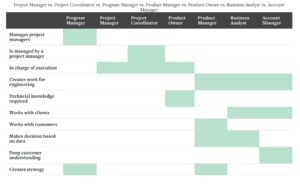
Program change management evaluates proposed changes at the program level considering the impacts across projects and alignment with objectives. In contrast, a Program Manager oversees multiple Project Managers to align projects and ensure coordination between project teams and stakeholders. Program management oversees the coordination between multiple projects to ensure strategic alignment, efficient resource utilization, stakeholder engagement, and benefits realization. Programs, on the other hand, have a more significant impact on the organization as they are designed to achieve strategic objectives that cut across multiple departments or functional areas.
Benefits Of Projects Vs Processes
There are several task management tools and software available that can help in managing tasks efficiently. These tools help in tracking progress, setting deadlines, and assigning tasks to team members. Project managers should be detail-oriented planners who can keep a project moving forward. They should also have experience working with project management software and other planning tools, such as work breakdown structures or Agile methodologies.
How To Become An Agile Coach: A Step-by-Step Guide
- Both are practices that essentially provide structure to tasks that aim to add customer value.
- Project managers lead specific projects, whereas product managers oversee the entire product lifecycle.
- Perhaps surprisingly, monday.com actually offers a better service for a lower cost when compared to MS Project.
- The Project Management Book of Knowledge (PMBOK) Guide 6th Edition defines a project as a temporary endeavor which is undertaken to create a unique product, service, or result.
- For routine operations, where tasks need to be completed consistently, employing a task-based approach is highly effective.
This alignment not only drives productivity but also encourages collaboration, as team members work together to ensure that each task is executed effectively to support the project’s success. For instance, a project to launch a new product may take several months and require a multitude of tasks such as market analysis, product design, development, and marketing strategies. Each of these tasks can often be completed independently yet contributes to the larger project goal. The complexity of a project often necessitates careful planning and coordination, as various tasks must be aligned to ensure that deadlines are met and objectives are achieved. Whether you’re managing projects or programs, the right tools are required to support your team and help you manage the effort.
Develop Your Project Management Skills On Coursera
By integrating the right tools, organizations can create a seamless workflow that enhances both project and task execution, ultimately driving better outcomes. Microsoft Project is project management software that’s developed and sold by Microsoft. It is used to create schedules, project plans, manage resources and keep track of time. It has features such as Gantt charts, Kanban boards and project calendars. It can be used to establish dependencies among tasks, create constraints, resolve resource conflicts, and it can also help in analyzing cost and schedule performance over the duration of the project.
Personality traits such as adaptability and comfort with ambiguity are well-suited to product management, while detail orientation and a process-driven mindset are advantageous for project management. The team structures between project and product management vary significantly. Project teams are assembled for a distinct purpose and are dissolved upon project completion. The project manager holds the highest authority within a project team, taking full ownership of the project’s execution. Project teams can be organized in different ways, including functional, project-based, or a matrix-based structure, offering a flexible chain of command. This includes monitoring progress, identifying and addressing issues, and adjusting plans and strategies as needed to ensure that the project or tasks stay on track and are completed successfully.
- The operations manager oversees standard processes for monitoring server performance, maintaining security, backing up data, managing upgrades, and handling service requests.
- Projects focus on precise tasks that need to be executed within a certain timeframe with the aim of achieving specific end results.
- If, on the other hand, you need help with technical deliverables and milestones for a specific project, a project manager will fit the bill.
- This example illustrates how programs strategically group multiple projects to realize benefits greater than the sum of their parts.
- For instance, a project to launch a new product may take several months and require a multitude of tasks such as market analysis, product design, development, and marketing strategies.
- Portfolio managers, meanwhile, are managing multiple programs within an organization, ensuring that all of them are working towards fulfilling strategic objectives.
It’s more powerful, has more features and is the preferred project management software for very established companies that run big projects. There are many reasons why Microsoft Planner is the champion in this bout. While the three descriptions differ a little, there is a common theme in all 3 solutions – work and project management. So it seems all of these tools aim to improve your processes and make managing them easier.
A project is designed to attain particular goals or objectives, typically involving shorter feedback cycles. Conversely, the success of product objectives is assessed over more extended periods such as quarterly or annually. Projects focus on precise tasks that need to be executed within a certain timeframe with the aim of achieving specific end results. To fully understand the different Microsoft Project Applications, we need to understand the evolution of MS Project.
Lack of clarity on priorities and decision rights between these dual managers will cause responsibility confusion, hence defining locus of authority and consistent communication are key. Companies with operations beyond projects may need functional or matrix structures to cover non-project work. This structure is common in consultancies, construction, and other fields where a team comes together to accomplish a defined project and then moves on to different projects. In a projectized organization, the organization is structured around projects. Functional organizations leverage skill specialization and consistency and suit simple, stable environments focused on core competencies.