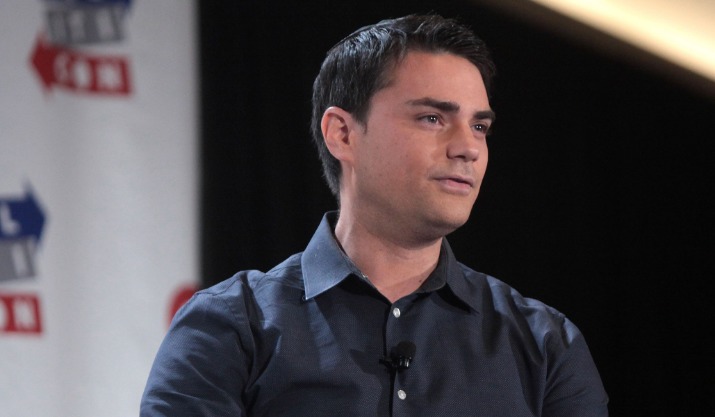
It involves Jordan Peterson—he’s a little bit right of center, but if you actually listen to him, there are certain topics on which he sounds downright conservative, and then there are other topics where he really doesn’t. This is all terrible metaphors here, I recognize, but the way that you posited this is maybe it’s just a society-wide thing and the campus is a place where obviously people are ready to go and kind of clash and do battle, as it always is. The content of this site is published by the site owner(s) and is not a statement of advice, opinion, or information pertaining to The Ohio State University. Neither text, nor links to other websites, is reviewed or endorsed by The Ohio State University.
Featured Articles
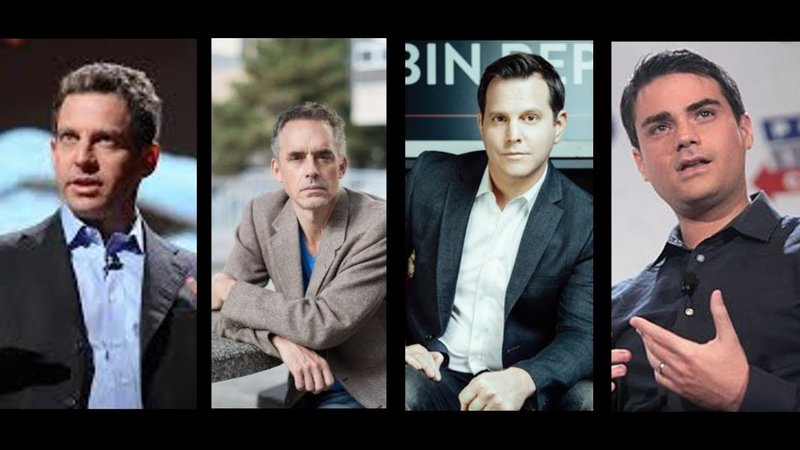
The intellectual dark web does not only recycle conservative theories explaining our supposed wave of left-wing irrationalism. The ideas they claim to defend from politically correct opponents of truth are themselves a longstanding part of the United States’s conservative tradition. A common refrain on the dark web is to debunk various left-of-center critiques by arguing that what appears to be systemic inequality is actually the result of individual choices or behavior.
Anti-surrogacy Activists Are Looking Out For The Kids

Of course, we can’t expect the IDW itself to have all the answers and the final truth (there’s no such thing). But I think the IDW has been and will continue to be, with other names and leaders, part of the ongoing dialectic evolution of our society. If the IDW ever really existed as anything more than a catchy, not-quite-serious brand name for an informal intellectual community, there is little doubt that it no longer does. A recently published short book by University of Sydney lecturer Jamie Roberts that charitably examines the IDW and its contributions to political dialogue, The Way of the Intellectual Dark Web, refers to it in the past tense. Onetime IDW fellow traveler Christopher Rufo wrote its obituary a year ago, arguing that the IDW fell apart because some of its members found Trump too icky and orange, some were unwilling to part ways with establishment science on COVID, and most of the rest lacked Rufo’s appetite for using political power to vanquish perceived enemies.
Finally, although Perspective’s implementation is not open-source, their team has released information on how the current system was trained and deployed, including the pretraining of the model (Lees et al. 2022). The problem for IDW members is that their core paradigm always presupposed the culture enabled and propagated by mass print literacy. But that culture has essentially been killed off by the digital medium within which many (now arguably ex-)IDW figures such as Kisin and Murray continue to thrive, along with sense-makers native to the new secondary orality, such as Rogan. Weinstein says our institutions need people who can stand up to the pressures of conformity and authority.
The Saga Of The Intellectual Dark Web And Its Canceled Book, Now Republished
This can be seen as a variation on British historian Robert Conquest’s “second law of politics” (often attributed to British conservative pundit John O’Sullivan), which holds that any organization not explicitly right-wing will sooner or later become left-wing. THESE ISSUES ALSO HAVE SOME relevance to Bari Weiss’s own career six years after she first introduced the IDW to the wider public. In July 2020, Weiss quit the Times in protest against the forced resignation of her boss James Bennet, then the paper’s editorial-page editor, over an op-ed he had published by Sen. Tom Cotton (R-Ark.). Weiss subsequently set up a Substack newsletter that became a multi-contributor magazine, the Free Press, and a podcast—thus migrating into the independent media-land of the IDW.
How Many Episodes Does The Intellectual Dark Web Podcast Have?
And yet he has always suffered the accusation that he wasn’t a ‘real’ intellectual. In a world in which religious fundamentalism has been totally and completely debunked, authoritarian ideologies have no intrinsic moral or intellectual authority on which to base electoral appeals. This is why they seek to steal the identity of conservatism and market conservatism as moderation. “The real Trump derangement syndrome was not to have seen how appalling and dangerous and deranging it was to have a person like this get anywhere near the Oval Office,” Harris added. I interviewed Harris in 2018 for a Daily Beast feature on Rubin, and he was very complimentary of both the man and his show.
“The Catholic Church in America must break the articles of peace, she must forthrightly acknowledge that a state of war exists between herself and the American political order,” Bozell’s magazine, Triumph, proclaimed. Dennis Prager, the reactionary radio host and founder of video propaganda mill PragerU, described the strategy explicitly during a conversation with Dave Rubin, a podcaster who now identifies as right-wing, but was pretending to be progressive when he was included in Weiss’s article. An insightful read both for followers of the IDW looking for a coherent and critical overview and for students of popular culture looking to understand this massive but decentralised popular intellectual movement. So at the end of these three decision points, you’re left with very few people still standing.

Individuals Associated With The Term

You have a splintering, you have a decomposition, you have really, honestly, a collapse of this movement as a coherent ideological force, intellectual force, and certainly political force. This core group amounts to about 8-10 prominent figures, but the broader “umbrella” of the IDW can extend to other intellectuals and commentators who share similar principles or participate in related discussions, possibly including dozens more. His conversations with academics, politicians and media personalities went for hours and were uncensored, and his approach was very different from the heavily produced interviews of mainstream media. The Big Idea is Vox’s home for smart discussion of the most important issues and ideas in politics, science, and culture — typically by outside contributors. Dark web intellectuals too have seen their culture invaded by women and minorities. They also have resentments to be capitalized on, and a commitment to rationality that can all too easily be transformed into a commitment to rationalizing their less salubrious political desires.
Contributor: How The English Premier League Is Globalizing Americans
- Although almost no Americans agree with the eldritch particulars of official Libertarianism, more than a few have affinities for its sentiments, especially those who are young and nonreligious.
- He became a target of progressive cancel culture by platforming guests who debunk the received truths of the left, such as Abigail Shrier and Dr James Lindsay.
- They have an interest in maintaining their lucrative relationship with the West, so they care a bit.
- Roger Kimball later upped the ante, alleging that the professors of the 1980s were former student protesters.
- “Jacob Pius,” who goes by @Yuyencian on Twitter, recently posted a “Map of the national independence movement in Far East” (above).
- Sam Harris used to say he was in the Intellectual Dark Web but then said he no longer supported it because it supports Donald Trump.
Liu Zhongjing believes that the Chinese, beginning from the administration of the Qin Dynasty, had become a fellaheen nation. Therefore, there is no Han ethnic group because the supposedly Han people are fellaheen. Fellaheen is not an ethnic identity, so they are simply slaves laboring under imperial bureaucracy. Also, he supports the idea of “various Chinese nations,” so in Sichuan, there’s a Basuria, in Hubei a Jingchuria, in Guangdong a Cantonia… It’s ridiculous, isn’t it?

Describing Alt-Right Communities And Their Discourse On Twitter During The 2018 US Mid-term Elections
Early commentators on the digital revolution tended to assume that this would simply accelerate the existing trajectory of the print revolution, and thus continue Whig history. Yet Kisin is right to express a newfound ambivalence about that core print-era value, free debate, for the simple reason that existing evidence suggests the digital revolution is not extending but reversing many aspects of the print paradigm. Taken together, these changes have tended to be narrated in hindsight as self-evidently positive, irreversible progress — what the historian Herbert Butterfield called “Whig history”.
The procedure is repeated five times with different training/test partitions, and the reported results are averages over the 5 test partitions. The model is trained for five epochs with 512 as the max input size of tokens, the standard maximum BERT-like model implementations, and a batch size of 16 entries as the maximum allowed due to resource restrictions. Other parameters are the default of the HuggingFace’s trainer,Footnote 9 representing standard values. We use the CLS token output to capture contextual embedding representations for all entries of the balanced dataset sample. BERT represents a sentence as a sequence of hidden states, which must be reduced to a single vector for downstream tasks. Therefore, BERT prepends a CLS token (short for “classification”) at the beginning of each sentence and uses a more straightforward method of taking the hidden state corresponding to the first token.
The foundation of Linguistic Inquiry and Word Count (LIWC) stems from extensive scientific research spanning decades, showcasing the capacity of language to offer profound insights into individuals’ psychological states, encompassing emotions, cognitive styles, and social concerns. While some connections are straightforward, like the use of positive words indicating happiness, such as “happy,” “excited,” and “elated,” many relationships between verbal expression and psychology are less apparent. For instance, higher social standing and confidence are linked to elevated use of “you” words and reduced use of “me” words. LIWC relies on decades of empirical research and provides specialized means to comprehend, elucidate, and quantify psychological, social, and behavioral phenomena.
- Intellectual ties to the right can win you toleration if you are David Frum, Ross Douthat, or David Brooks.
- As for the political complexion of it, it isn’t at all what people think, and this has been something that Heather and I have discovered in a very odd way.
- The essence of the movement, as I see it, is having the courage to stand up to groupthink, even if it means losing friends or having your positions willfully misconstrued because they don’t fit neatly in a particular ideological box.
- Bott made substantial contributions to topology, differential geometry, and mathematical physics.
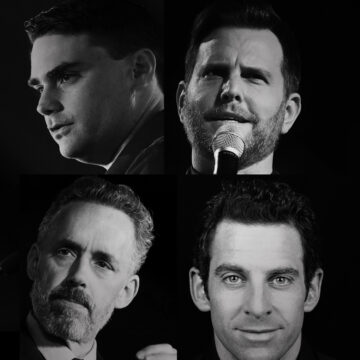
Peterson had been an obscure University of Toronto psychologist whose Jungian psychology–based first book, Maps of Meaning, reportedly sold about a hundred copies when it was first released in 1999; Weinstein and Heying had been faculty members at a tiny, very left-wing liberal arts college in Olympia, Washington. The intellectual dark web is perhaps a silly name for the group of thinkers it describes, but the search for a novel term does point to the radical transformation of American politics in our current moment. Donald Trump’s election has set off a chain reaction that has caused a great many Americans to rethink their ideological commitments and the place of those commitments within the broader society. For the people like Harris, Peterson, Rogan, Rubin, Sommers, Shapiro, Maher, and Weinstein, the noxious effects of political correctness on American society was the central lesson to be drawn from this recent history. And if the often glowing portraits of the dark web in publications like The New York Times and The Atlantic are any indication, or Peterson’s appearance at this year’s Aspen Ideas Festival, many liberals seem to agree. But though these figures believe their discovery has led them to form the basis of a new intellectual center in this changing context, recent history suggests their ideas may more likely find a home on the right.