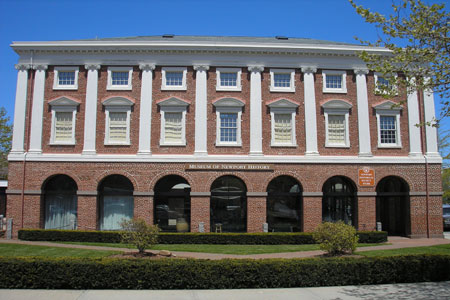
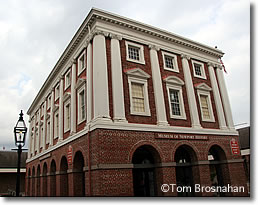
The Brick Market was the last of his confirmed works, and is shows the influence that English architecture had on his designs. The building’s design was based on the Old Somerset House in London, with Harrison copying elements such as the arcade on the lower floor, the pilasters on the upper floors, and even the alternating arched and triangular window pediments. Also, bricks are preferred because they are solid, tough and durable to serve their users for several years without needing replacement. They are suitable for relocation in harshest of weathers including during fires, and tend to provide good insulation. Such features contribute to the desirability of bricks for construction in areas that are more likely to experience natural disasters or climatic variations, factor that enhances market for the product. 6Wresearch is the premier, one stop market intelligence and advisory center, known for its best in class business research and consulting activity.
They bring outdoor spaces into their own with a touch of elegance to the visible surroundings, thereby wedding utility with beauty. In the case of this market segment, the needs of landscape architects and committee works will prove to be a driver of brick demand. Generally, modular bricks are used, which are a little larger than the standard ones, for ease in construction. Modular bricks are heavily used in extensive work where time and cost-to-benefit ratios matter the most. Because of the size of these bricks, it gives greater speed in installation and helps complete timely construction without any compromise on the quality of construction.
The global brick industry is extremely competitive but innovative, committed to delivering products while being concerned for sustainability in this industry. Quality and technology advancements in this field are injected by principal companies, such as Acme Brick Company and Wienerberger AG. Against this backdrop, these principals will steer the future course of the industry to rapidly meet the rapidly growing global demand in an environmentally friendly manner. The environmental standards are complied with, and durability, sustainability—until now, its products prove continuous change in production methods that meet today’s market requirement and future trends in construction. The research report delves into market segmentation, utilizing both qualitative and quantitative research methods to provide a thorough analysis. It also evaluates the impact of financial and strategic perspectives on the Concrete Block and Brick Market growth.
Brick Lane Vintage Market
Infrastructure renewal and urban renewal in developed economies sustain the demand for high-quality bricks, which must strictly meet regulatory standards. However, the industrial brick-manufacturing industries in the major emerging markets depicted in rapid urbanization as an imperative are also experiencing a continuous surge in residential and commercial construction activities. The concrete segment is anticipated to expand at a significant CAGR of 4.1% during the projected period. In the bricks market, the concrete segment refers to bricks manufactured from cement, aggregates, and water. A prominent trend in the concrete brick segment is the increasing preference for precast concrete bricks, which are manufactured off-site and transported for construction.
While there is no public information on the number of sets sold in 2004, given the abysmal revenue, it is safe to assume many LEGO collectors missed out on heavy-hitters from this year. Expect continued scarcity in the reseller market for early Star Wars and Harry Potter releases during this time. The LEGO investment landscape extends far beyond just “LEGO flippers” buying and selling new-in-box sets – that’s only about 30% of the overall secondhand/resale LEGO market. The remainder of the brick economy is driven by demand for used sets, individual LEGO bricks and pieces, and minifigures. Once a former service yard and now a street food hotspot, this food market is one of Brick Lanes most popular spots. You’ll be spoilt for choice with the food trucks at Ely’s Yard serve up piping hot burgers, chicken wings, burritos, jerk chicken, Argentinian steaks, and much much more.
Global Brick Market Is Estimated To Grow With A CAGR Of 31% From 2024 To 2031
- Extrusion reduces the weight of the bricks, making them lighter, and assisting in the firing and drying processes, which increases their adoption among brick manufacturers.
- Modular bricks are heavily used in extensive work where time and cost-to-benefit ratios matter the most.
- Additionally, the use of substances with better thermal insulation houses allows in attaining electricity financial savings over a constructing’s lifecycle.
- The pandemic highlighted the want for adaptable and sustainable construction answers, similarly, influencing market trends.
- Under Middle East & Africa, this report covers GCC Countries, Egypt, South Africa, and other countries in the region.
Some of the different types of bricks available in the market are clay bricks, concrete bricks, sand-lime bricks, and fly-ash bricks. The Bricks market is currently experiencing moderate growth due to the increased demand for sustainable and energy-efficient building materials. The fluctuation in raw material prices coupled with strict environmental regulations is posing challenges to the growth of the Bricks market.

Unique Places To Stay

In October 2021, Wienerberger successfully finalized the purchase of Meridian Brick in the North American market, encompassing their operations in both the United States and Canada. Meridian Brick, known for its annual production of over 1.1 billion bricks, holds a prominent position as a primary brick supplier in regions such as Texas, the southeastern United States, Ontario, and Canada. Recent tariff measures in the United States are prompting manufacturers to boost domestic capacity, streamline cost structures, and revamp sourcing strategies. The realignment of trade flows is encouraging diversification, with industry players seeking suppliers in tariff-free zones and strengthening partnerships with local raw material providers. These policy shifts are compelling market participants to balance cost control with compliance and supply chain reliability. This brick industry is embedded with all sorts of competitors, continuously showcasing milestones of companies that have other kinds of strengths and bring forth different innovations.
Recent Development In The Brick Market
Moreover, the availability of alternative building materials like wood and metal is also a challenge for the market. Beyond their structural utility, bricks also contribute to aesthetic appeal, with different colors, textures, and finishes available. Modern construction techniques incorporate innovative materials, such as interlocking bricks or those made from recycled materials, to enhance sustainability. Despite advancements in construction technology, traditional bricks continue to play a crucial role in the global building industry, symbolizing resilience and endurance in architectural heritage.
Regional Insights
The construction of residential buildings, commercial structures, and infrastructure projects has driven the growth of the market in countries like China, India, and Southeast Asian nations. Since building sector operations have resumed despite the present COVID-19 epidemic, the development of the blocks and bricks market may stabilise. In order to make up for the losses they suffered, construction businesses are accelerating their investment plans, which will entail the use of cutting-edge building materials. Furthermore, supply chain problems have been overcome since global commerce has partially resumed.
List Of Brick Companies
Dealer and retail outlets captured 60% of brick market revenue in 2024 thanks to entrenched suburban dealer networks and DIY refurbishment demand. Yet direct project-based distribution is the fastest lane, expanding 3.70% annually as contractors integrate procurement with scheduling software. Major U.S. roofing distributor SRS was acquired by The Home Depot for USD 18.25 billion, underscoring consolidation that favors high-volume direct buys. Manufacturers exploit colorfast clays and high-friction textures to serve landscaping customers seeking design variety with low maintenance.

INDUSTRIAL DEVELOPMENT
Off-site prefabrication is scaling, compressing project timelines by 30-50% and cutting labor outlays by up to 80%. Modular builders require lightweight, high-strength hollow bricks that integrate with panelized frames. Porotherm clay units deliver superior thermal insulation in Australian pilots, matching structural codes while lowering embodied energy. Digital design tools such as BIM and real-time sensor feedback help optimize dimensions, enabling near-zero off-cuts on-site.
Application Insights
Innovation in product design substantially boosts the concrete blocks and bricks market growth through improving their functionality and enchantment. Advances including progressed thermal insulation, soundproofing, and aesthetic customization make these substances extra attractive to developers and designers. For example, power-green blocks can help meet stringent environmental policies and decrease heating and cooling expenses, appealing to sustainability-targeted clients. Additionally, progressive designs like interlocking blocks simplify production strategies, reducing hard work charges and time.
The market is full of hidden gems and is a haven for collectors or any history buffs on the hunt for something special, and even has a hidden café inside. The Tea Rooms also hosts some retail gems for beauty, wellness, and culture offering a mix of beauty products, jewellery, and prints from around the globe. For those who are in the mood to get a little mystical, the market even has a tarot reader on site for a glimpse of your future. Backyard Market is the arts and crafts hub of Brick Lane and has a great little creative community. This artisanal market is found in the Old Truman Brewery and has a bustling array of stalls for all of your creative needs.
Brick Market By Region Shipment Analysis By Value From 2018 To 2030:
Startups and smaller manufacturers have entered the market with a focus on producing environmentally responsible bricks. These companies are developing bricks made from recycled materials, low-energy manufacturing processes, and eco-friendly designs. Their ability to cater to the growing demand for green building materials makes them formidable competitors. The COVID-19 infection has not stopped the building sector from operating, thus market growth for blocks and bricks may stabilise.